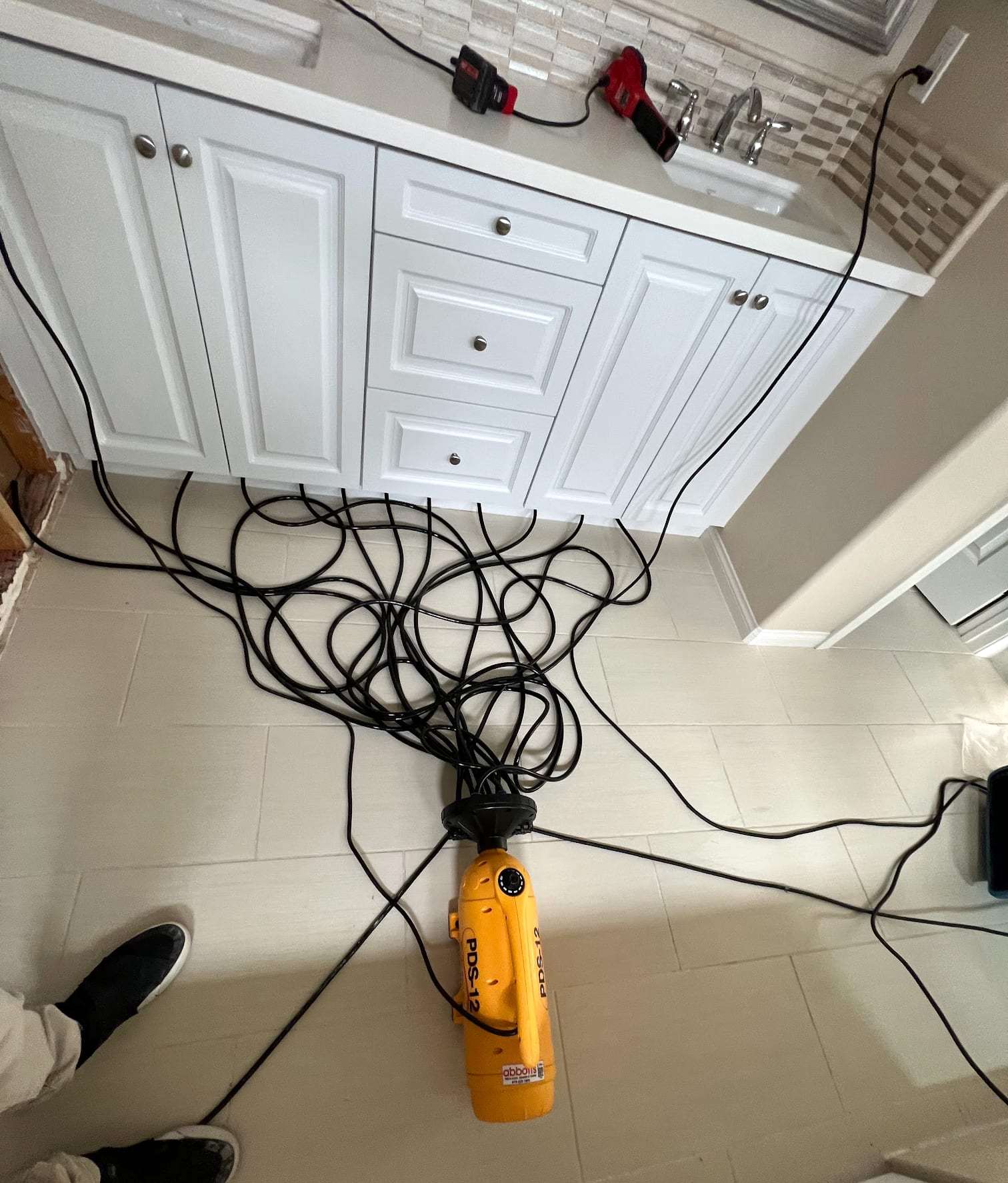
Bathroom vanity with hoses feeding a cabinet drying system. A representative photo of the task, not a record of work at any particular property.
Common ceiling and wall finishes
- Knockdown
- Texture sprayed on in blobs, then flattened with a trowel to a mottled look. Very common in Colorado homes of this era.
- Orange peel
- A fine spray texture that resembles the skin of an orange, often on walls.
- Popcorn or acoustic
- A thick, bumpy sprayed ceiling texture used in some older homes. Test it before disturbing it if the house dates from the early 1980s or before.
- Smooth or level 5
- A flat finish with no texture. Shows every imperfection, so patches need extra care.
- Feathering
- Blending new texture outward beyond the patch so the edge is not a hard line.
Why patches show
Hand-applied texture is never identical. The original was sprayed by a crew working fast across a whole house, and a patch is done in a small area by a different person with different equipment. Light from windows, especially low winter sun across a ceiling, exaggerates any difference in pattern height or spacing.
Paint adds a second layer of mismatch. Old ceiling paint has aged and absorbed some cooking or fireplace residue, and new paint over a patch rarely matches unless the whole plane is painted. That is why many contractors propose painting an entire ceiling, or a wall corner to corner, rather than touching up a square.
Spot repair or whole surface?
Spot texture and paint
- Smaller scope, faster
- Works best on heavily textured, flat-painted ceilings in dim rooms
- Edges may show in raking light
- Easier to argue for in a tight claim
Retexture or repaint the full plane
- Better visual result, especially in open great rooms
- Larger scope and more disruption
- Some policies and adjusters address uniform appearance differently
- Worth discussing before work begins, not after
Before the drywall crew starts
- Confirm moisture readings are normal in the framing around the opening
- Ask what texture they plan to apply and to show a sample board
- Ask whether they will feather beyond the patch and how far
- Agree on whether paint covers the patch, the ceiling or the room
- Find the paint brand and color if records exist from the builder or a previous owner
Common questions
- Who decides whether the whole ceiling gets painted?
- Your insurer decides what the claim includes, based on the policy and its view of what is needed for a reasonably uniform appearance. Ask the contractor to explain the recommendation in writing and share it with the adjuster.
- Is a smooth ceiling easier to patch?
- Smooth ceilings are actually the hardest to patch invisibly. Expect extra coats of compound, careful sanding and primer before paint.
General information for Highlands Ranch, not a quote or professional advice. In an emergency, call 911.