The situation
Illustrative example. Not a real job or customer.
An invented 1990s two-story is under contract. The buyer's inspector notices a slightly different ceiling texture in a rectangle over the kitchen island, directly beneath the upstairs laundry. The seller had disclosed a past washer hose leak on the disclosure form.
- The inspector takes moisture readings on the patch and surrounding ceiling; all read normal.
- The inspector also notes the washer still has rubber hoses of unknown age and no drain pan.
- The buyer asks for documentation of the earlier leak and repair.
- The seller provides photos from the day of the leak and an invoice for drywall repair, but no drying log.
- The buyer requests an independent moisture and mold assessment of the ceiling cavity.
- The assessor finds no moisture or visible growth through a small inspection hole; the seller replaces the washer hoses as a goodwill repair.
The sale closed a few days late. With a drying log from the original repair, the extra assessment probably would not have been needed.
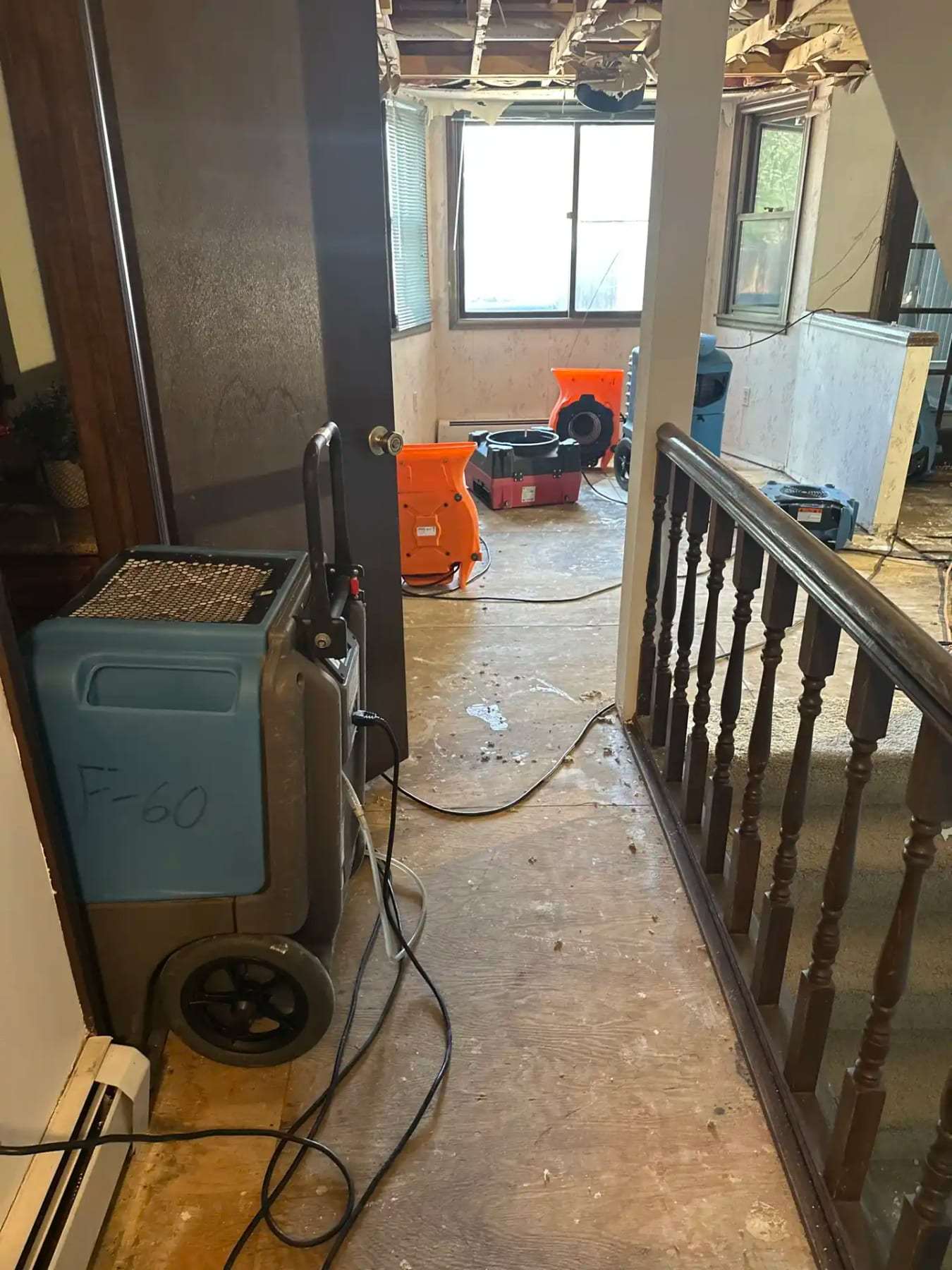
Dehumidifier on an upstairs landing below a ceiling opened after a leak. Illustrative image of the process; it does not document a job done for this site.
Records the seller had and did not have
| Record | Had it? | Effect |
|---|---|---|
| Photos from the day of the leak | Yes | Showed the source and extent |
| Drywall repair invoice | Yes | Showed repair was done |
| Moisture readings and drying log | No | Left the question of hidden moisture open |
| Plumbing invoice for hose replacement | No | Inspector flagged hoses of unknown age |
If you are selling after a past leak
- Gather any drying logs or final readings from the restoration contractor
- Replace washer hoses and toilet connectors of unknown age before listing
- Consider a drain pan under an upstairs washer
- Disclose as your agent advises and attach documentation
- Keep everything in one folder you can hand over
The takeaway
Patched ceilings under upstairs laundry rooms and bathrooms are common in houses this age, and inspectors know where to look. A repaired leak becomes a problem mainly when nobody can show that the hidden structure was dried. The drying log is the document most often missing and most often requested.
For buyers, the same logic applies in reverse. A patch with no paperwork is a reason to ask for readings and, if needed, a look inside the cavity before closing.
Common questions
- Is a patched ceiling a reason for a buyer to walk away?
- Not usually by itself. Patches under laundry rooms and bathrooms are common in older homes. The useful questions are whether the source was fixed, whether the cavity was dried, and whether readings today are normal.
- Who pays for an extra assessment during a sale?
- That is a negotiation between buyer and seller, guided by the contract and their agents. In this example the buyer paid for the assessment and the seller replaced the hoses.
- How long should a seller keep drying logs?
- As long as they own the house, and ideally copies go to the buyer at closing. They are the clearest evidence that hidden areas were dried.
General information for Highlands Ranch, not a quote or professional advice. In an emergency, call 911.