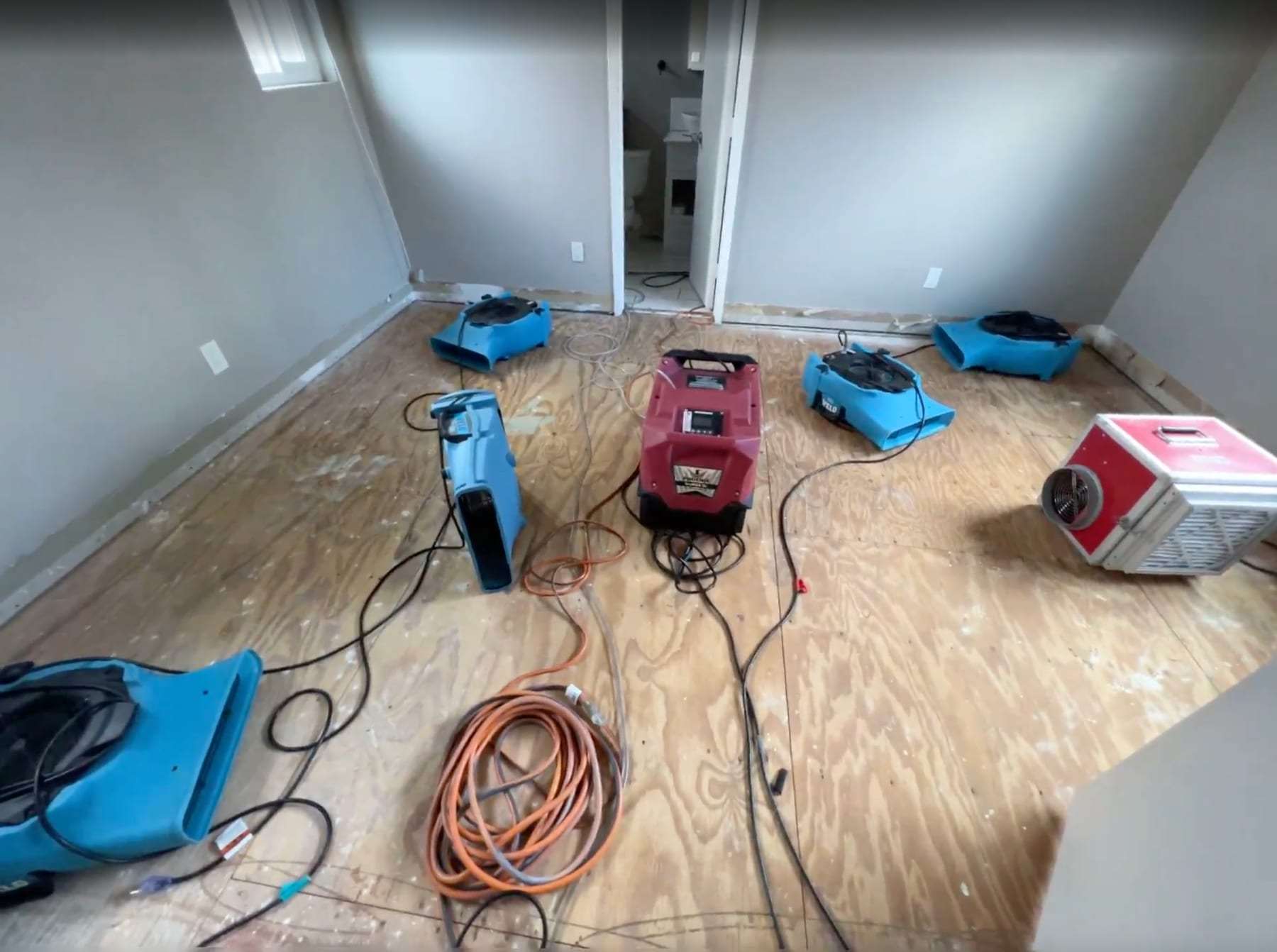
Bedroom subfloor drying with air movers and dehumidifiers. Example of the work involved; the photo does not show a specific property or a job for this site.
The situation
Illustrative example. Not a real job or customer.
An invented two-story home has a great room with a vaulted ceiling and tall windows on the north side. After a heavy snow, a week of sunny days and cold nights follows. Late one afternoon the owners see water running down the drywall beside the top of a window.
- They check the upstairs bathroom, which is on the other side of the house, and find nothing wet.
- They note the drip is heavier in the afternoon and stops overnight.
- From the yard they see a thick ridge of ice and long icicles along the eave above the window.
- A roofer opens a channel through the ice to let meltwater drain, without climbing onto the icy slope above the vault.
- A restoration contractor takes readings: the drywall beside the window and the insulation in that wall bay are wet; the vaulted ceiling itself reads normal.
- The lower section of drywall beside the window is removed, wet insulation is pulled, and the cavity is dried.
The window frame was dried and checked for damage, the wall was rebuilt, and in spring an insulation contractor addressed air leaks and insulation depth above the vault.
Key decisions
- IfWater appears with no plumbing nearbyThenLook outside before opening walls; timing with sun and snow is a strong clue.
- IfIce is above a steep or high roofThenLeave removal to a roofer with proper equipment.
- IfWindow frame is wetThenHave it checked; some frames and sills swell or delaminate and need replacement.
Documentation that helped the claim
- Dated photos of the ice ridge and icicles from the yard
- Video of water running inside, showing time of day
- Weather notes for the snowfall and following days
- Roofer's note describing the ice dam
- Moisture readings and removal list from the restorer
Common questions
- Why did the vaulted ceiling stay dry when the wall got wet?
- In this example the water entered at the eave and ran down inside the exterior wall rather than across the ceiling. Where water shows up depends on roof framing, insulation and where the ice sat, so readings on both wall and ceiling are worth taking.
- Could the owners have prevented it?
- Pulling snow off the lower edge of the roof with a long-handled roof rake, while standing on the ground, can reduce ice on reachable eaves. Over the longer term, sealing air leaks into the attic and improving insulation over the vault addresses the cause.
- Was the window a separate repair?
- It depended on what an inspection of the frame showed. Wet frames sometimes dry without lasting harm; others swell or let water into the wall below and need replacement.
General information for Highlands Ranch, not a quote or professional advice. In an emergency, call 911.