Second-floor laundry overflow
A washing machine drain hose slips out during a cycle. Water soaks the laundry room floor and comes through the kitchen ceiling below.
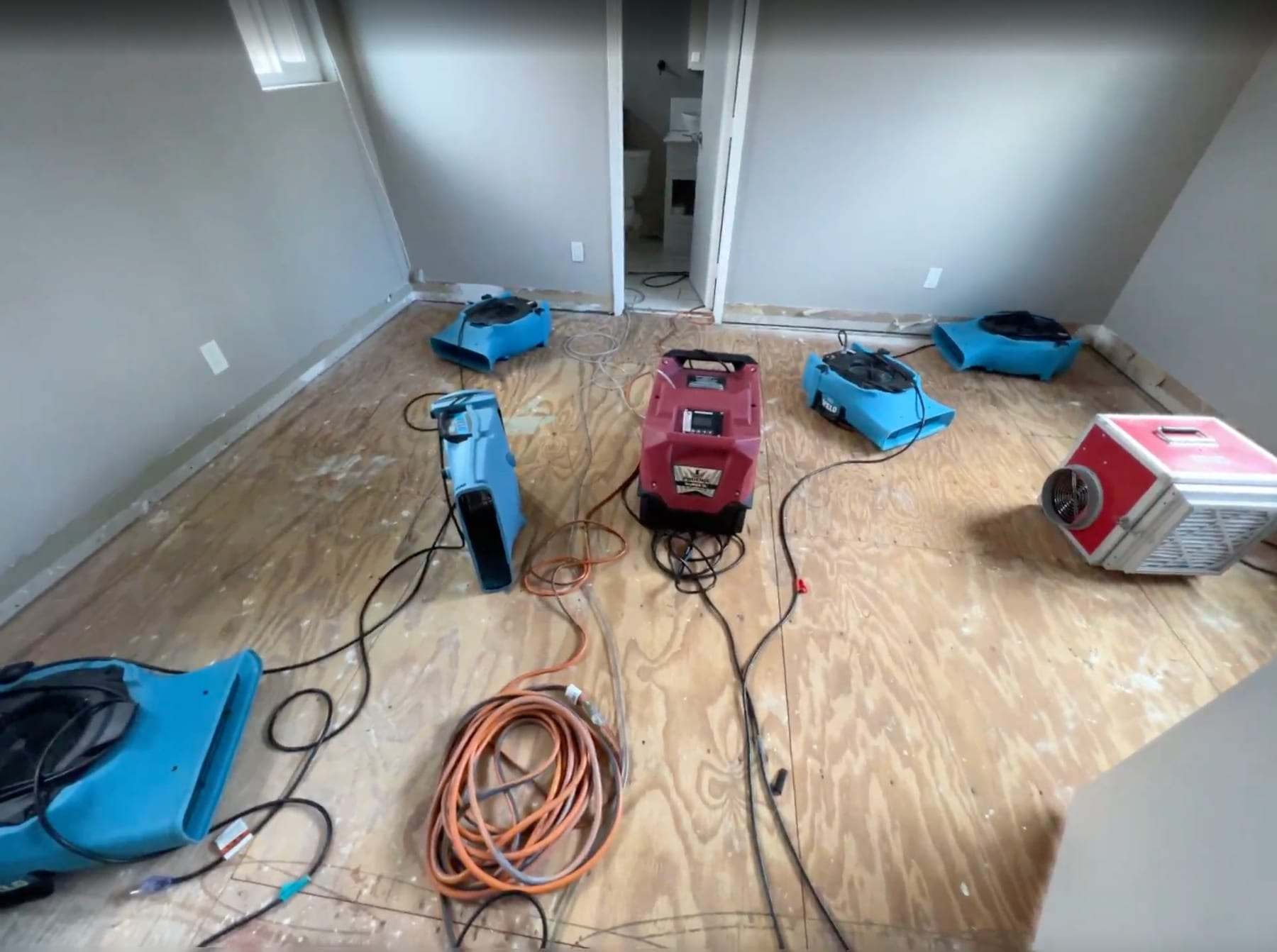
From a split supply line in a 1980s two-story to a washing machine overflow above a finished basement, here is how water is extracted, the structure dried, and the repairs made.
Before you hire anyone, ask whether the technicians hold IICRC certification for water damage work, and ask to see it.
Highlands Ranch homes are newer than much of the metro area, but many are now 25 to 40 years old, an age when original water heaters, washing machine hoses, toilet supply lines, and plumbing materials start to fail. In a two-story home, a leak upstairs can run through the floor system into the kitchen ceiling and then into a finished basement before anyone notices.
The goal of water damage restoration is to stop the damage from spreading: extract water quickly, find every material it reached, and dry the framing, subfloor, and drywall to normal levels before mold has a chance to start. Repairs follow once the structure is confirmed dry.
In a two-story home, a leak upstairs can run through the floor system into the kitchen ceiling and then into a finished basement before anyone notices.
ZIP codes served: 80126 (Littleton), 80129 (Littleton), 80130 (Littleton).
Also nearby: 80122, 80120, 80124, 80131, 80121, 80128, 80125, 80112, 80111, 80113, 80123, 80110, 80237.
Highlands Ranch is an unincorporated, master-planned community in northern Douglas County that began development in the early 1980s and grew through the 1990s and 2000s. Most homes are single-family houses and townhomes with basements, many of them finished, and a large share are now old enough that original plumbing components and appliances are wearing out.
Construction from that era matters. Polybutylene supply pipe was widely used in U.S. homes from roughly the late 1970s into the mid-1990s and has a history of failures at fittings. Not every Highlands Ranch home has it, and many have been re-piped, but it's worth knowing what's in your walls. Colorado winters add frozen pipes and hose bibs to the list.
Water follows gravity, so the work starts where the leak began and follows it down through each level.
Drying works from the source downward so wet upper materials don't keep feeding the levels below.
Use moisture meters and thermal imaging to follow water from the source through floors, ceilings, and walls.
Pull standing water and remove saturated materials like carpet pad and insulation that won't dry in place.
Place dehumidifiers and air movers on every affected floor, sometimes opening ceilings to dry floor cavities.
Record moisture readings until framing, subfloor, and drywall return to normal levels for your home.
Replace drywall, texture, paint, flooring, and cabinetry as needed, coordinated with your insurance adjuster.
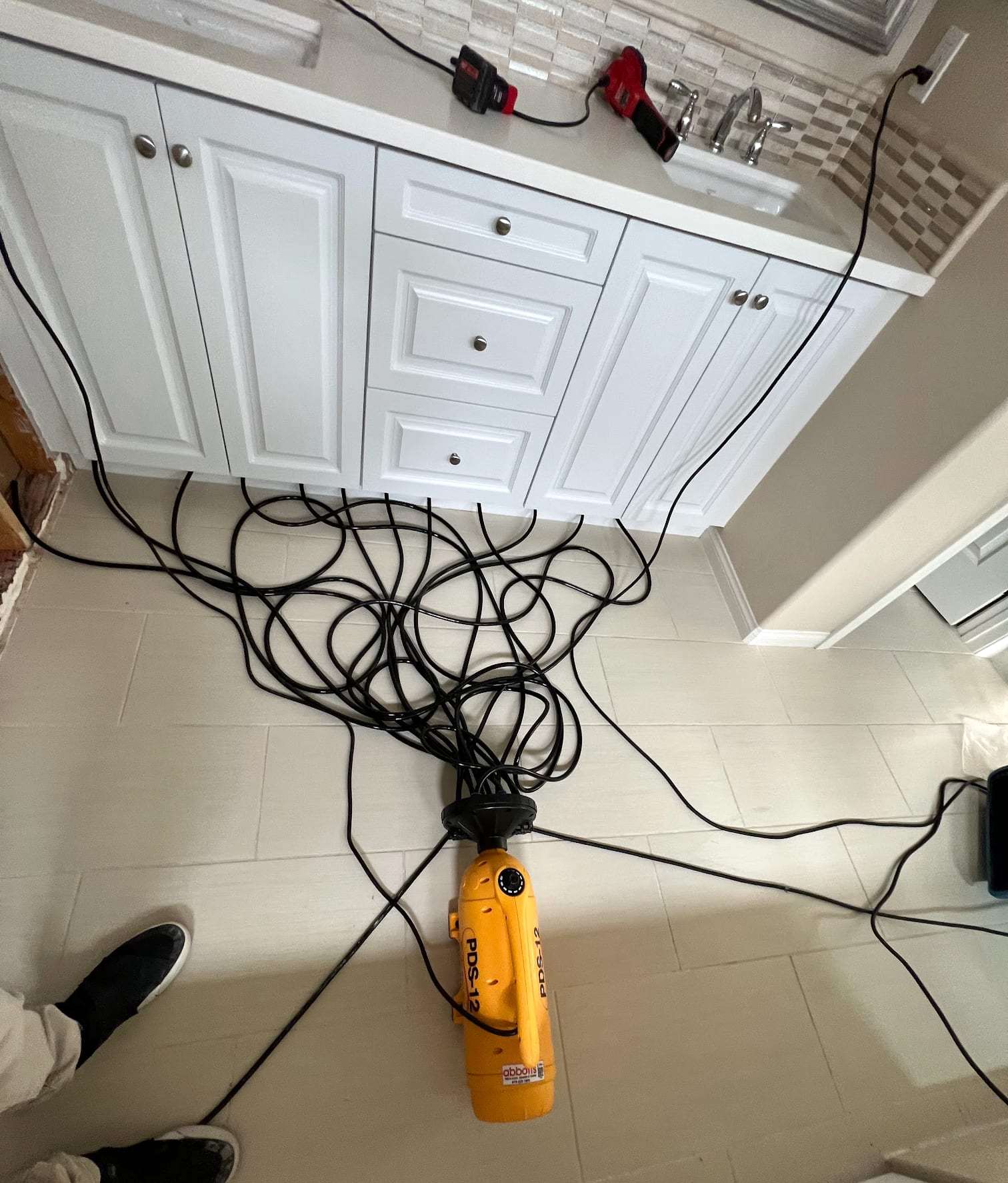
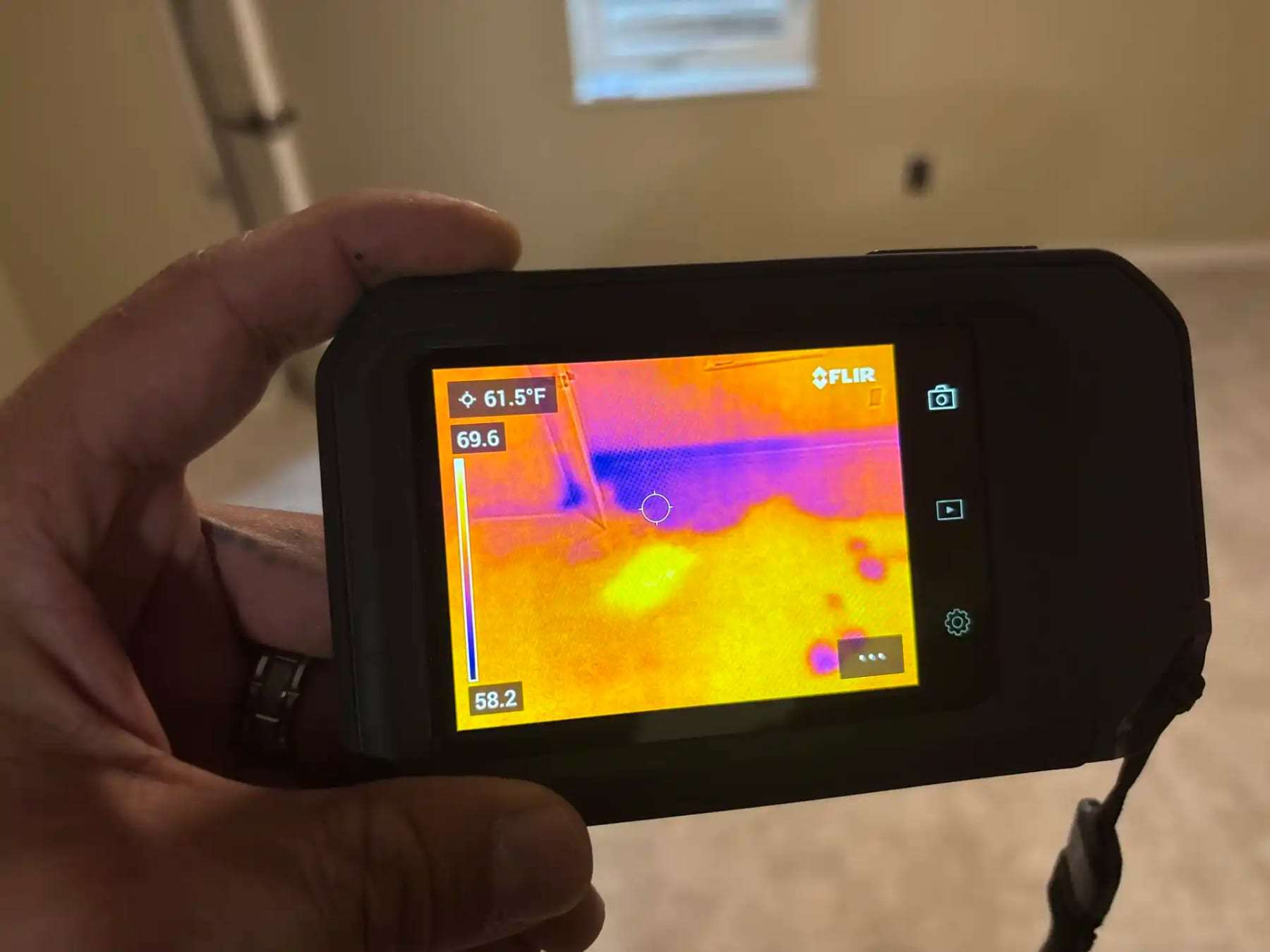
Drying equipment is only half the job. The other half is checking, every day, whether it's working. Technicians take moisture readings in the same spots each visit: drywall, baseboards, framing and the subfloor. They compare each reading with a dry part of your house.
The daily log becomes part of the record you can give your insurer.
A washing machine drain hose slips out during a cycle. Water soaks the laundry room floor and comes through the kitchen ceiling below.
A gray plastic supply line splits at a fitting in a ceiling, soaking the drywall and insulation in a finished basement.
A family returns from a weekend away to a basement with wet carpet across two rooms and a rusted-out tank.
A hose left connected through a cold snap cracks the bib inside the wall, and the leak only shows up when spring watering starts.
Most water damage in Highlands Ranch homes starts with a supply line or appliance, not a storm. Check these first.
| Source | What usually fails | Where the water travels |
|---|---|---|
| Washing machine | Burst or cracked fill hoses; drain hose popping out of the standpipe | Upstairs laundry rooms send water through the floor to the ceiling below |
| Water heater | Slow tank seep, failed relief valve discharge, corroded fittings | Often in a basement or garage corner where nobody looks for weeks |
| Refrigerator ice maker | Kinked or split plastic supply line behind the fridge | Water runs under cabinets and hardwood before it shows |
| Dishwasher | Loose drain connection, worn door gasket, supply line under the unit | Subfloor beneath the dishwasher stays wet while the kitchen floor looks fine |
| Toilet supply line | Aging braided or plastic connector failing at the nut | Releases full line pressure; can flood a floor in minutes |
Longer explainers and planning tools for the leaks that show up most in Highlands Ranch homes.
How do I know if my home has polybutylene pipe?
Polybutylene is usually gray (sometimes blue or black) flexible plastic pipe, often stamped 'PB2110.' It may be visible near the water heater, under sinks, or in an unfinished basement ceiling. A licensed plumber can confirm it.
Should I run fans myself while waiting for help?
Opening windows in dry weather and running household fans can help with surface drying, but don't turn on the HVAC system if water reached ductwork, and don't use a heater to dry things quickly; it can spread moisture into other areas.
Why does my ceiling need to be opened if it already looks dry?
The drywall surface may dry while the floor cavity above it stays wet. Moisture trapped in joists and subfloor can lead to mold and odor. Readings tell technicians whether a cavity needs to be opened.
How long will drying equipment be in my house?
Clean-water losses commonly take three to five days of drying, though multi-level damage, hardwood floors, or delayed discovery can extend that. Technicians check progress daily.
Can a restoration company work directly with my insurance company?
Many do. Ask for an itemized estimate (many carriers use Xactimate) with photos and moisture readings, and ask whether someone there will talk with your adjuster. Coverage decisions are made by your insurer.
What if water got into the basement carpet and the drywall?
Carpet pad is usually replaced. Carpet may be dried if the water was clean and drying starts fast. Drywall is evaluated by moisture readings; often only the lower portion needs to be replaced.
How do I know the drying is actually finished?
By readings, not by touch. Moisture in drywall, framing and subfloor is measured and compared with a dry area of the same house. Drying is complete when the wet areas match that reference and the readings are recorded.
This form is not connected. This website is a draft preview: no business has been confirmed to receive requests, so the fields below are switched off and nothing can be sent. In an emergency, call 911.
A reputable restoration company will usually ask what failed, whether the water is off, which floors are affected, and whether the basement is finished. For an active loss, ask how soon someone can realistically arrive to begin extraction and drying, and what the first visit will cost. Photograph the damage, open a claim with your insurer, and get the scope of work in writing.
Shut off the water, switch off power to wet rooms, photograph the damage, and call your insurer. Then choose a restoration company you have checked; starting drying early keeps the damage limited. If there is any danger, call 911.