Background
This example is invented. The house is a mid-1990s two-story with a finished basement. The mechanical room shares a wall with a guest bedroom. The owners added a whole-house humidifier a few years earlier because winter air felt very dry, and the humidifier drains through a clear plastic tube to the floor drain.
Nobody slept in the guest room between the holidays and early spring. When guests arrived, they found the carpet damp along one wall and a musty smell in the closet.
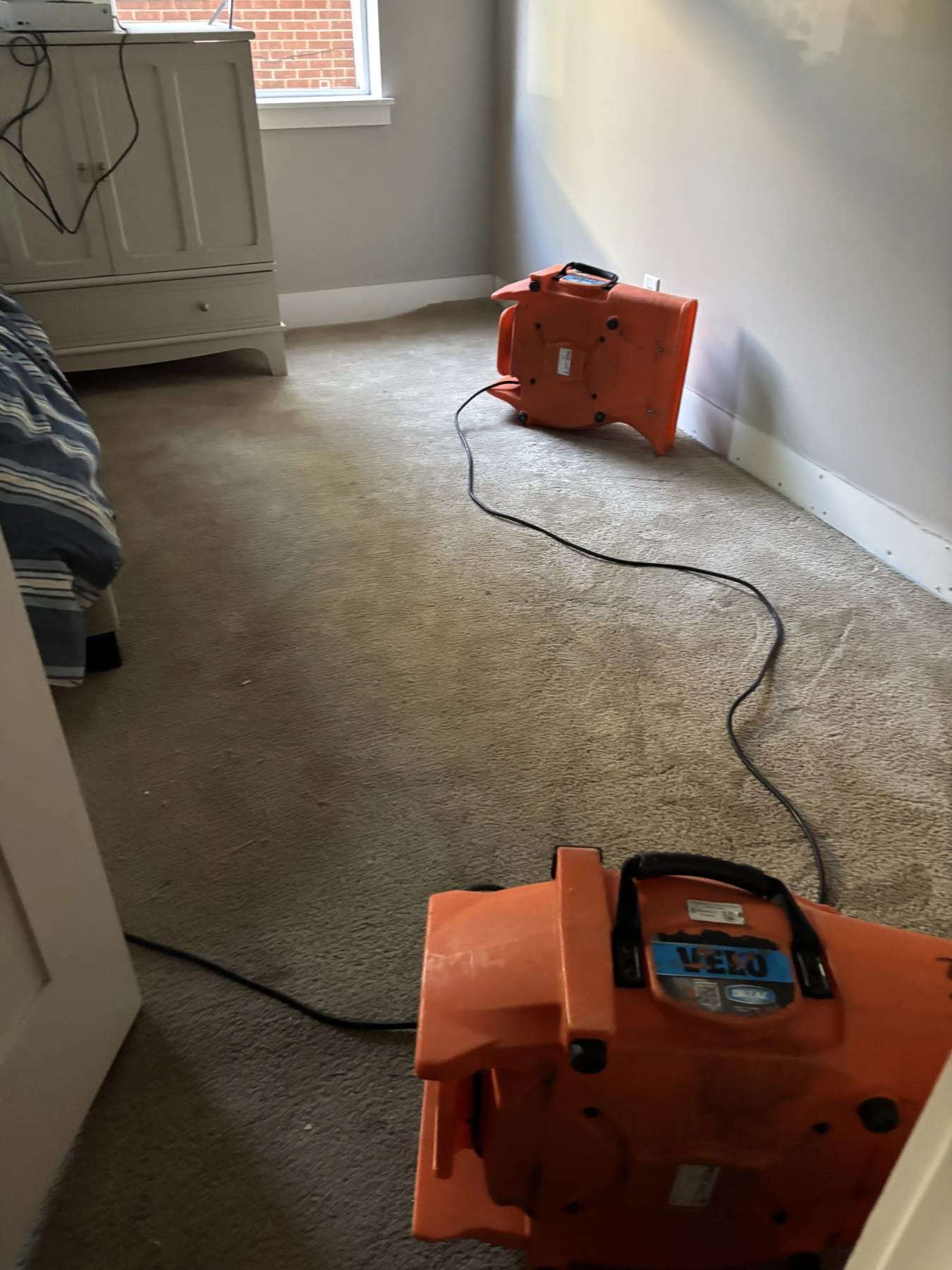
Air movers drying carpet in a bedroom. A representative photo of the task, not a record of work at any particular property.
What happened
Illustrative example. Not a real job or customer.
Hard water had built up scale on the humidifier pad and in its drain fitting. The drain tube clogged, water backed up and spilled out of the humidifier housing, ran down the furnace cabinet and under the framed wall into the bedroom.
- The owners pull back the carpet and find the pad soaked along a strip about three feet wide.
- They trace the water back to the furnace, see the overflowing humidifier and close its supply valve.
- An HVAC technician cleans the humidifier, replaces the pad and drain tube and recommends a yearly service.
- A restoration contractor finds wet bottom plates and drywall on both sides of the shared wall and some discoloration on the back of the drywall in the closet.
- Because the leak had run for weeks, the lower drywall on the bedroom side is removed and the area is cleaned and dried; a mold assessment is suggested before rebuilding.
The repair was larger than a fresh leak would have been, mainly because of time. A sensor near the furnace and a pad change each fall were added to the house routine.
Why time changed the outcome
| If found | Likely scope |
|---|---|
| Within a day | Dry the carpet and pad in place, check the wall base |
| Within a week | Replace the pad, possibly a low drywall cut on one side |
| After several weeks | Drywall removal on both sides, cleaning of framing, possible mold work |
Habits that would have caught it
- A leak sensor on the floor beside the furnace
- A humidifier pad change at the start of each heating season
- Occasional walk-throughs of rooms that are rarely used
- Looking at the clear drain tube for scale or standing water
Common questions
- Would insurance treat this as sudden or gradual?
- It could go either way, depending on the policy and how long the adjuster believes the leak ran. That uncertainty is a reason to check rarely used rooms and equipment regularly.
General information for Highlands Ranch, not a quote or professional advice. In an emergency, call 911.